Quick answer
A drain that serves only your home is yours to look after. However, a shared drain that flows into a public sewer is Yorkshire Water's job if your home was built before 2011. For homes built after 2011, the owners look after the shared drain, unless Yorkshire Water adopts it.
Four words that decide who pays
Drain talk gets confusing because a few terms mean different things. Learn these four and the rest gets easier.
- Drain: a pipe that serves one property
- Shared drain: a pipe that carries waste from two or more homes
- Lateral drain: the part of a home's drain that runs beyond its boundary to the sewer
- Public sewer: the larger pipe, often under the road, that the water company owns
East Riding Council gives a short test. It says a sewer is "pipework that drains more than one property". Your boundary is the edge of your plot, while a pipe that crosses it is no longer a simple home drain.
What the 2011 transfer did
Before 2011, many shared pipes in terraced streets belonged to private owners. That changed on a set date. Since then, the build date of your home has mattered.
Defra's guidance on the private sewers transfer sets out the change. Specifically, on 1 October 2011, privately owned sewers and lateral drains that joined a public sewer on 1 July 2011 became the sewerage company's job. In York, that company is Yorkshire Water.
Drains that serve only one property, inside its boundary, did not transfer. Yorkshire Water words the rule more briefly, as "built before 2011". However, Defra's wording is the precise one, so use it if a date is close.
Who looks after what in a terrace
Yorkshire Water's "whose pipe is it" page gives the split. You look after the drain from your home into the ground, up to the point where it meets a shared drain or public sewer. Yorkshire Water looks after three things, although the build date matters for the first:
- Shared drains that flow into a public sewer, if your home was built before 2011
- Drains outside your boundary that flow into a public sewer
- Public sewers
For example, take a terrace where each house has a short drain to a shared run behind the row. If the shared run joins the sewer, it may have moved to Yorkshire Water in 2011. Each short drain from a back door to that run still belongs to its own household.
How to find out which part is whose
- Ask your neighbours if they have slow drains too. Yorkshire Water says that when nearby homes share a problem, the blockage is probably in its sewers.
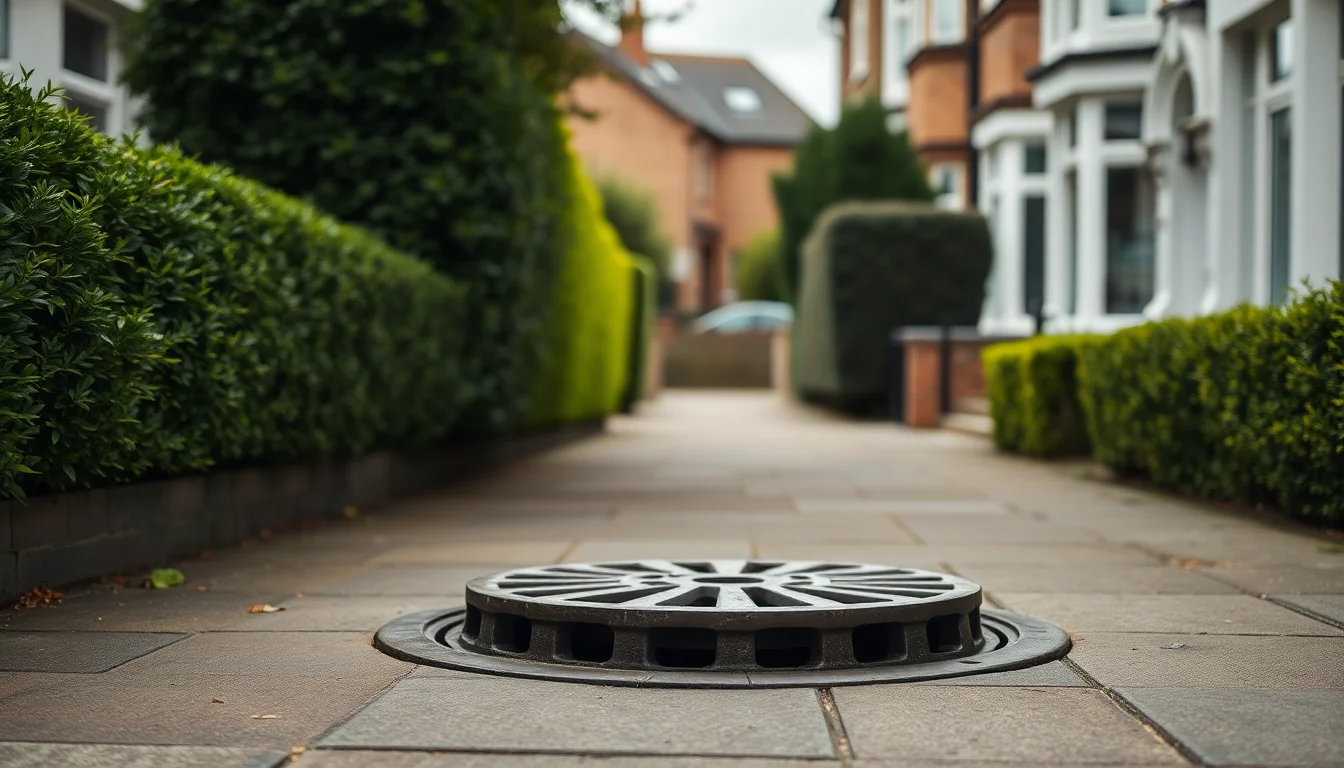
- Find the manhole covers and inspection chambers around your home. Count how many pipes join at each one.
- Get the title plan for your home from the Land Registry. It shows your boundary, which helps you see where your own pipe ends.
- Read Yorkshire Water's page and check your build date against the 2011 rule.
Those checks cost nothing, yet they often answer the question. If the answer is still unclear, a survey can settle it. A CCTV drain survey sends a camera along the pipe, so you can see where a shared run joins the sewer. The drainage investigation page covers surveys made to trace unknown routes.
When a shared drain blocks
Act fast, because a shared blockage soon affects the homes next door. Report it to Yorkshire Water if it looks like a drain it looks after. Never try to unblock a sewer yourself, as Yorkshire Water warns on its sewer flooding page.
If sewage is coming up, mark your request urgent and keep clear of it. Our guide to who is responsible for a blocked drain covers the whole picture, while this one stays with shared pipes.
When the pipe is yours, you can use the request form on the contact page. The form is open 24/7. Ask the engineer for a written quote before work starts, because prices vary, and ask what the quote covers. Common starting points are blocked drains in York and blocked drains in Selby.
Repairs and records
A cracked shared pipe that you own needs a plan, because the cost may fall on several households. Agree who arranges the work, and put it in writing. Ask the engineer for photos or a video of the fault.
Our drain repairs guide for York lists the signs that a pipe needs repair, not unblocking. The drain repairs service page explains the main options. Building work near a drain adds another step, while our guide to a Yorkshire Water build-over agreement covers it.
If you are buying a home, check the drains before you commit, since a camera can find faults that a viewing misses. The home buyer survey guide shows what it can find. For service areas such as Haxby and Bishopthorpe, see the locations page.
Related guides
- Blocked Sewer in York: Who to Report It To and What Gets Cleared
- Older Terraced Homes in York: Old Pipes, Shared Runs and When to Survey
- Blocked Manholes and External Drains in Tadcaster
- Drain Surveys in Selby & Tadcaster: What a CCTV Survey Actually Finds
Frequently asked questions
Who owns a shared drain between two houses?
It depends on when the homes were built. Yorkshire Water says it looks after a shared drain that flows into a public sewer if the home was built before 2011. For later homes, the owners look after it unless Yorkshire Water adopts it.
Did the 2011 change cover every private drain?
No. Defra says drains that serve only one property, inside its boundary, did not transfer. Those stay with the owner, while shared runs that joined a public sewer in time did move.
Who clears a blocked shared drain?
If it is a drain Yorkshire Water looks after, report it to them. If the owners look after it, they arrange the work together, since no one owner can act alone. Mark your request urgent if sewage is coming up.
How can I see where my shared drain goes?
A CCTV survey shows the route and condition of a pipe. It can also show where a shared run joins the sewer, because the camera follows the pipe. Ask the engineer to save the video for your records.