
Quick answer
The general binding rules are standard conditions for small sewage discharges to the ground. The gov.uk guidance says you need no permit if you meet every rule that applies to you. This guide covers the main points. However, check the gov.uk page for the full list.
What the rules are
Off-mains homes treat their own sewage, therefore the law sets conditions for where the treated liquid goes. The gov.uk guidance "General binding rules: small sewage discharge to the ground" lists them in one place. Read it once before you decide anything.
The idea is simple, since each rule is a clear test. Meet every applicable rule and you need no permit. If you miss one, check the guidance on what to do next.
This guide is general information, not legal advice. The Environment Agency and gov.uk hold the official wording, so read that page for your own case, because details differ from site to site. A neighbour's system may follow different rules from yours.
The main points in plain English
Plain words help here, because the full guidance is long. These are the points from the gov.uk summary:
- The discharge must be 2 cubic metres a day or less
- You must use a septic tank or a small sewage treatment plant
- The liquid must go to a drainage field
- A septic tank must not discharge effluent to a watercourse
- The system must not sit in a floodplain
Two cubic metres is 2,000 litres. Showers, baths, toilets and washing machines all add to the daily total, because a larger household uses more water.
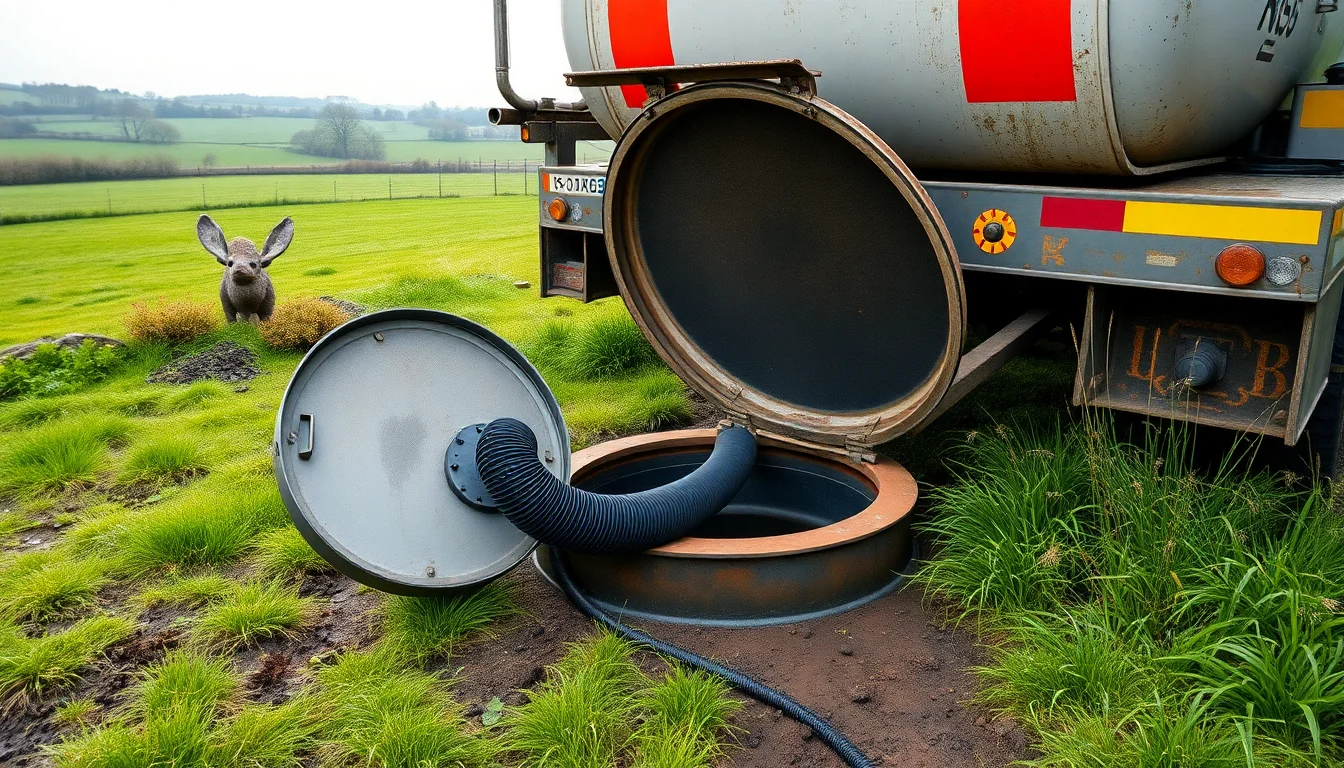
A drainage field is a set of buried pipes that spreads the liquid through the soil. The soil does the final treatment, so a rainwater soakaway is not a substitute. Rainwater and sewage need different treatment, although both drain away.
Why the floodplain rule matters
Wet ground cannot take more liquid. While a river is high, a drainage field may stop working, and untreated effluent can then reach the surface or the water. For that reason the rules keep systems out of floodplains.
This is also why the site has septic tank pages for septic tank emptying in Wheldrake and septic tank emptying in Elvington. Both villages lie on the Derwent Ings, so flood risk is a fair question to ask there. The same question suits any low-lying plot.
That does not mean any tank in those villages breaks a rule. It means you should check your own site against the gov.uk page, since each site differs.
Near the Ouse, our guide to blocked drains in Selby shows how high water affects drains. It also helps to know your own flood history. Selby also has its own page for septic tank emptying in Selby.
Who looks after the system
North Yorkshire Council says private drainage such as septic tanks is the landowner's responsibility. If you rent, ask your landlord who handles the tank, since the answer can differ. Put the reply in writing.
Regular emptying is part of looking after a system, since sludge builds up over time. Our guide to septic tank emptying in the Vale of York explains the warning signs and what happens on the day. The septic tank emptying service page has more detail.
Ask the engineer what the visit covers, and ask for a written record of it. A clear record shows you looked after the system. Keep the record with your other house papers, because a buyer may ask for it later. Add the date of each visit.
When something goes wrong
A slow drainage field can have more than one cause. For example, the field itself may be soaked, or a pipe leading to it may be blocked or broken. A CCTV drain survey can show what is happening inside the pipework that feeds the field.
If sewage is coming up in the house or garden, treat it as urgent. Stay clear of it, because it carries health risks. Yorkshire Water advises that you should not walk through sewage, and that you wash your hands and disinfect your footwear if you touch it. Read the sewage emergency page and our guide to what to do first in a drain emergency.
A short checklist
Use these steps to check where you stand. Do them in order, since each one builds on the last:
- Find out whether you have a septic tank, a cesspit or a treatment plant.
- Find where the treated liquid goes.
- Read the gov.uk general binding rules page and compare each rule with your site.
- Check whether your site sits in a floodplain.
- Keep records of each emptying visit and any repair.
When you want help, send the request form, which is open 24/7. Mark it urgent if sewage is coming up. The locations page helps you find your area, while the services hub lists all drain services.
Frequently asked questions
Do I need a permit for my septic tank?
The gov.uk guidance says you need no permit if you meet every applicable rule. However, if you miss one, check the guidance or ask the engineer what to do next.
What is a drainage field?
It is a set of buried pipes that spreads liquid from the tank across the soil. The soil treats the liquid further before it reaches the ground water, which is why the field needs to stay dry enough to work.
Can a septic tank drain into a ditch or stream?
No. The gov.uk summary says a septic tank must not discharge effluent to a watercourse. A small sewage treatment plant is a different system, so read the full page for the rules that apply to it. Do not assume the two follow the same rules.
Why does this site mention Wheldrake and Elvington?
Both villages have septic tank pages here, and both lie on the Derwent Ings. The floodplain rule makes flood risk worth checking in low-lying areas like these, because wet ground slows a drainage field.